Marcus Aurelius
An emperor whose private reflections continue to raise questions about judgment, duty, and power.
History Geeks contributor
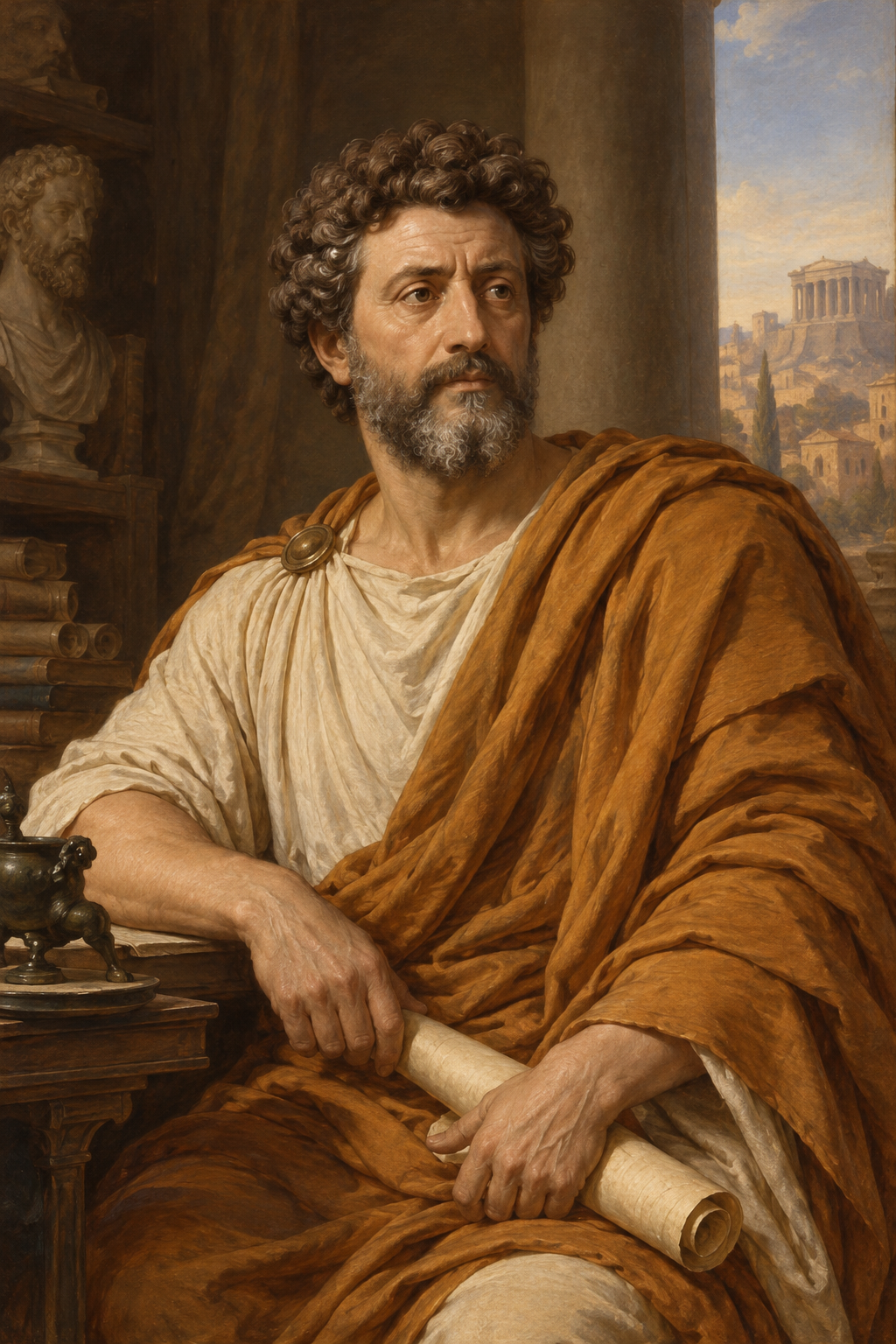
Contemporary artistic interpretation.
Overview
Marcus Aurelius ruled the Roman Empire from 161 to 180 CE, initially alongside Lucius Verus. His surviving reflections, now known as Meditations, connect him with the Stoic philosophical tradition.
The work consists of reminders addressed to himself, rather than a systematic manual written for a modern audience. It returns to judgment, conduct, human interdependence, and the impermanence of life.
His philosophical reputation should be considered alongside his position as an imperial ruler. Reading his reflections within the Roman world makes room for both the interest of the writing and the tensions of political power.
Achievements and contributions
His writings preserve an unusually personal encounter with Stoic practice. Surviving portraits also show how his public image drew on the visual language of the philosopher, including the mature beard associated with Greek intellectual life.
Ideas and historical context
The reflections ask how a person can respond responsibly to circumstances beyond their control. They also stress the relationship between individual conduct and life among other people.
What we can take from the record
Meditations can reward slow reading without being treated as a set of universal productivity rules. Comparing the private writer with the public emperor is a useful starting point for thinking about the distance between ideals and institutions.
Sources and further reading
The Metropolitan Museum of Art, youthful portrait of Marcus Aurelius