Hannibal Barca
A commander whose campaigns reveal the possibilities of tactical skill and the limits of battlefield success.
History Geeks contributor
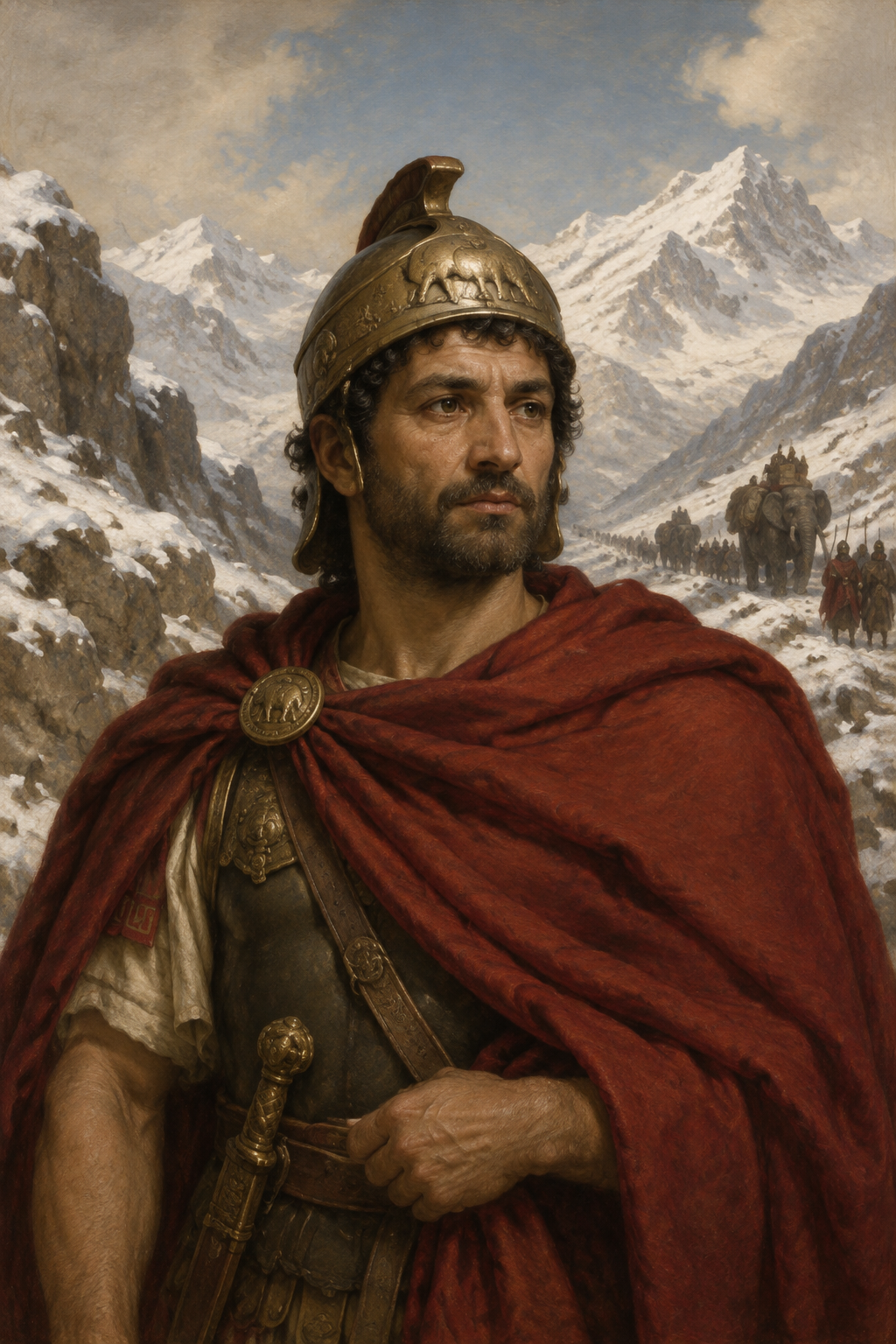
Contemporary artistic interpretation.
Overview
Hannibal was a Carthaginian commander in the Second Punic War. His march from Iberia across the Alps in 218 BCE brought an army into Italy and placed Rome under sustained pressure.
At Cannae in 216 BCE, his forces surrounded and defeated a much larger Roman army. Yet a succession of victories did not bring the political settlement he needed, and Rome continued the war.
Recalled to North Africa, Hannibal was defeated by Scipio at Zama in 202 BCE. Ancient accounts of his life were largely written outside Carthage, so their admiration and hostility both deserve careful attention.
Achievements and contributions
His campaigns combined reconnaissance, alliances, terrain, and the coordination of different kinds of troops. Cannae remains an important case study, but reducing his career to a single manoeuvre misses the logistical demands of keeping an army in the field.
Ideas and historical context
Hannibal left no surviving philosophical treatise. Claims about his personal principles are therefore interpretations of reported actions, rather than a documented system of thought.
What we can take from the record
His career invites a distinction between winning an engagement and achieving a lasting political result. Reading Roman accounts alongside modern scholarship also shows why the perspective of the source matters.